THE CHALLENGE
Restoring eBay’s Presence in Germany
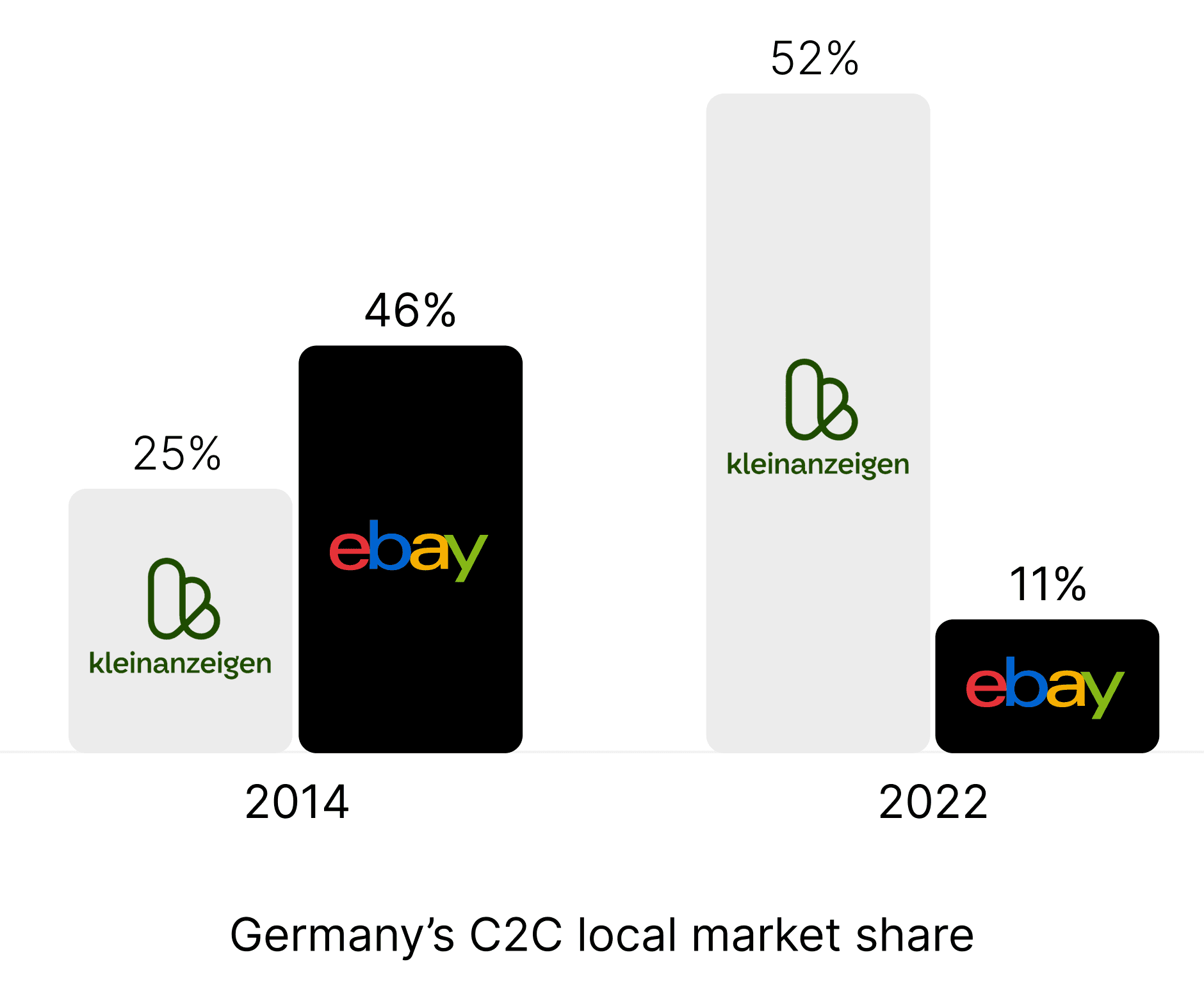
While Germany’s C2C market nearly doubled, eBay’s local market share collapsed from 46% to 11%. Even with basic UX, competitors like Kleinanzeigen dominated by prioritizing local, while eBay lost users, trust, and revenue.
This wasn’t just a dip, it threatened the survival of eBay’s C2C business in Germany. A turnaround was critical.
Why C2C?
The biggest drop was in C2C, where eBay had the most brand recall, active supply, and potential to recover quickly. B2C was saturated, led by players with deeper logistics and stronger consumer trust.
C2C, especially local in Germany, still held brand relevance and untapped opportunity. That’s where we focused our turnaround—where we had the right to win and the urgency to act.
Why Local?
We couldn’t win back the C2C market in Germany without solving for Local.

50% of all C2C transactions in Germany are local, but eBay lacked a locally focused experience.
Every 1% market share lost meant ~$30M GMV slipping away.
Competitors prioritized local commerce—eBay was falling behind.
The Key to Restoring eBay’s Presence:
To restore eBay’s presence in Germany, we needed to rebuild trust in the local C2C market by creating a seamless, locally-focused shopping experience.
To make that happen, I first needed to deeply understand why users weren’t choosing eBay for local and what would bring them back.

Leading with Lean UX
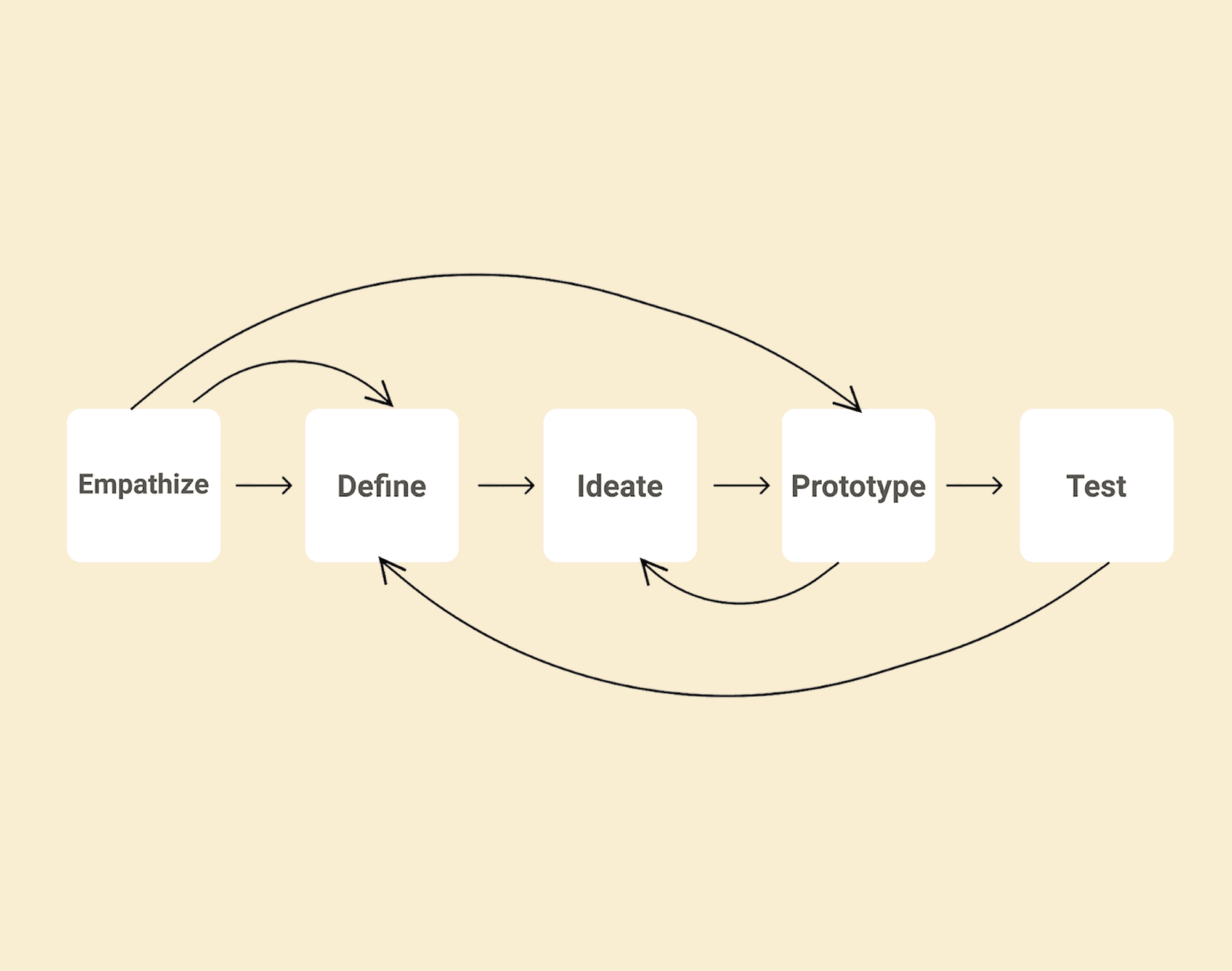
With no dedicated PM or researcher initially—and the urgency to move fast—I led the project through a Lean UX approach focused on quick, iterative learning and execution.It allowed us to rapidly uncover insights, validate ideas early, and collaborate tightly across a lean cross-functional team.
DISCOVERY → EMPATHIZE
1) Understanding Users & Market
Before jumping into solutions, I focused first on understanding users, competitors, and the business landscape to define the right problem to solve.
A)Uncovering core user pain points
I started by reviewing prior eBay studies and survey feedback from Germany’s C2C buyers and sellers. I layered in recent marketplace behavior data and customer support patterns to pinpoint where users faced the most friction—and ran a quick pulse survey with active local users to validate the emerging patterns.
It quickly became clear:
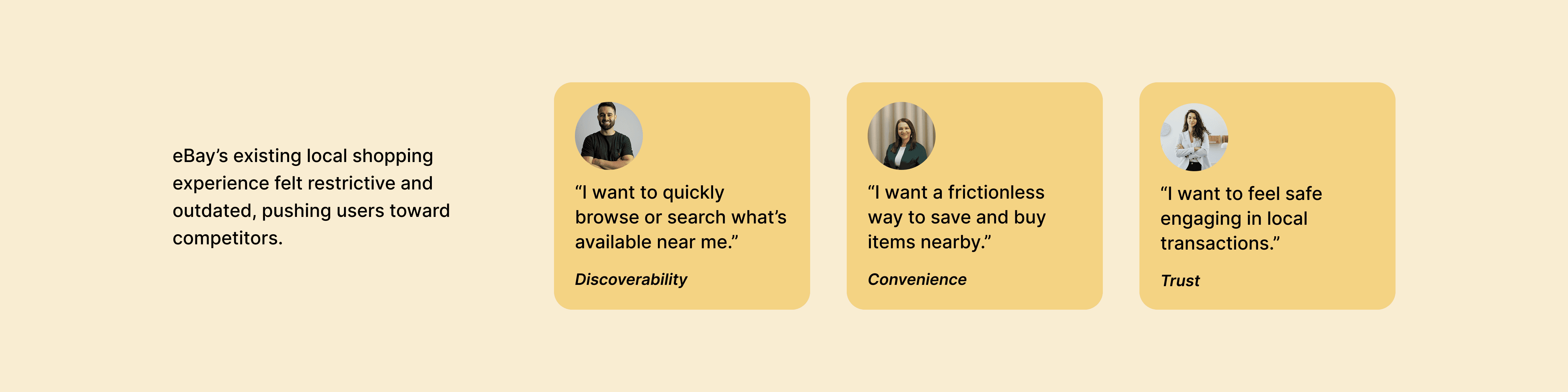
eBay’s local shopping experience felt restrictive and outdated—falling short of how users wanted to browse and buy nearby. As a result, many were turning to competitors offering simpler, more intuitive local journeys.
Key pain points:
What Users Really Wanted
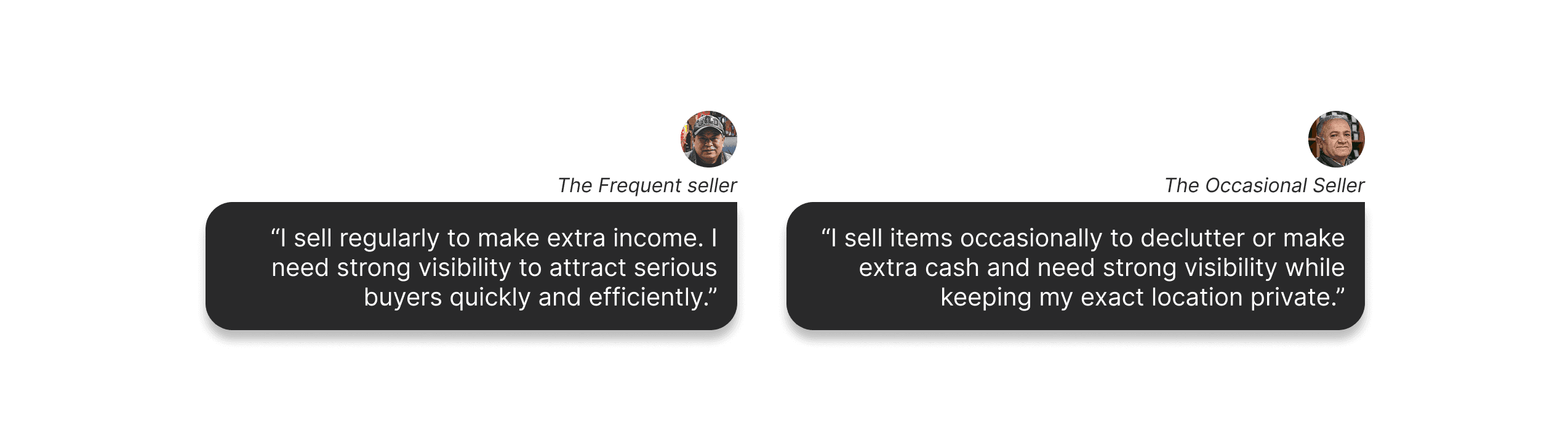
B) User Personas: Who Was I Designing For?
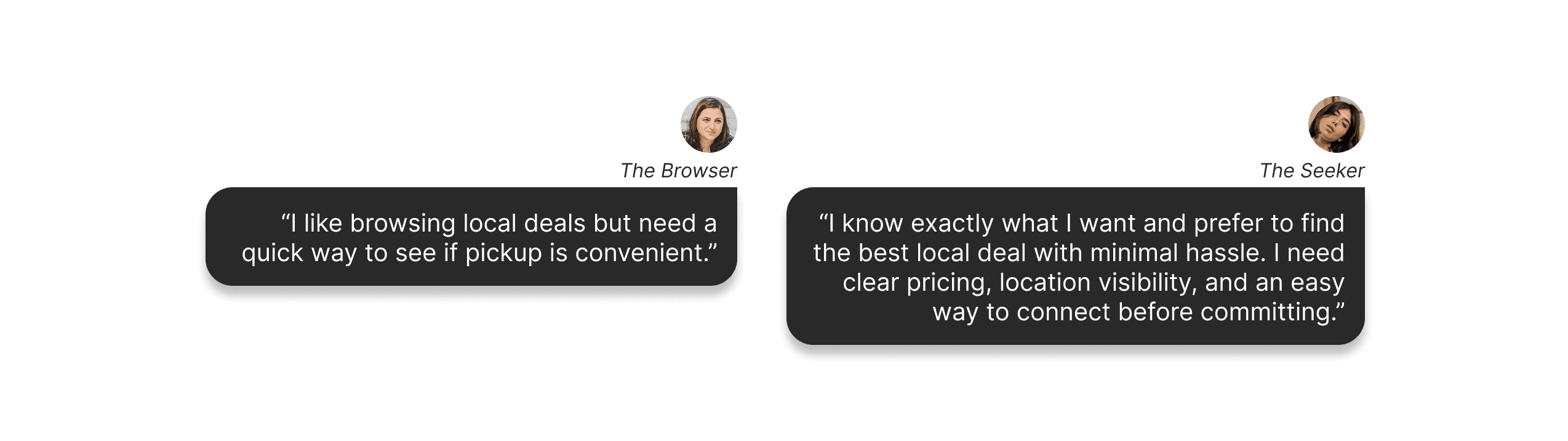
In Germany, C2C local shopping thrives on trust, convenience, and transparency. Buyers prioritize clear pricing, easy pickups, and safe communication. Sellers seek strong visibility, security, and quick sales. Cash payments and direct messaging are common, making a frictionless local experience essential.
C) Mapping the Competitive Landscape
To deepen my understanding, I conducted a competitive analysis of market-dominant platforms like Kleinanzeigen and Facebook Marketplace. Both were built with local shoppers in mind, making it easy for nearby buyers and sellers to connect.
However, browsing remained heavily list-based, requiring manual filters without an intuitive or visual way to explore local inventory.

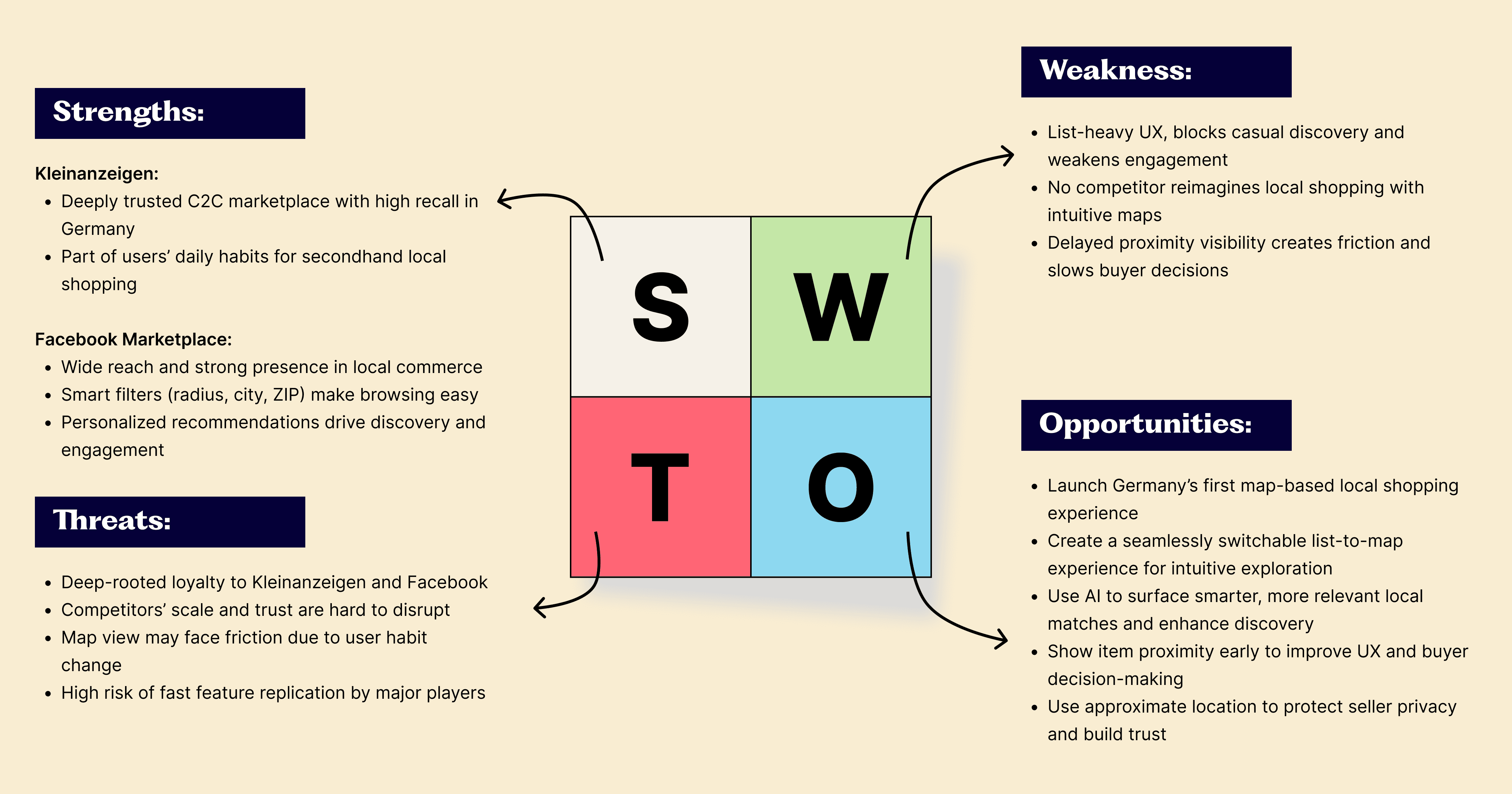
SWOT Analysis
To identify clear differentiation opportunities, I conducted a SWOT analysis focused on leading local C2C competitors in Germany.
DEFINE → STRATEGY & PROBLEM FRAMING
2) Defining the Strategy
Building on the user pain points, unmet needs, and competitive gaps uncovered during Discovery, I framed a focused strategy to revive eBay’s local C2C market in Germany.
Goal
Revive eBay’s local C2C market in Germany by driving higher engagement, seamless discovery, and repeat usage to reclaim market share
eBay’s local C2C experience was outdated and restrictive, falling behind evolving user expectations. To win back users from deeply trusted competitors, we couldn’t just replicate list-based browsing — we had to deliver something more: a smarter, more engaging local shopping experience.
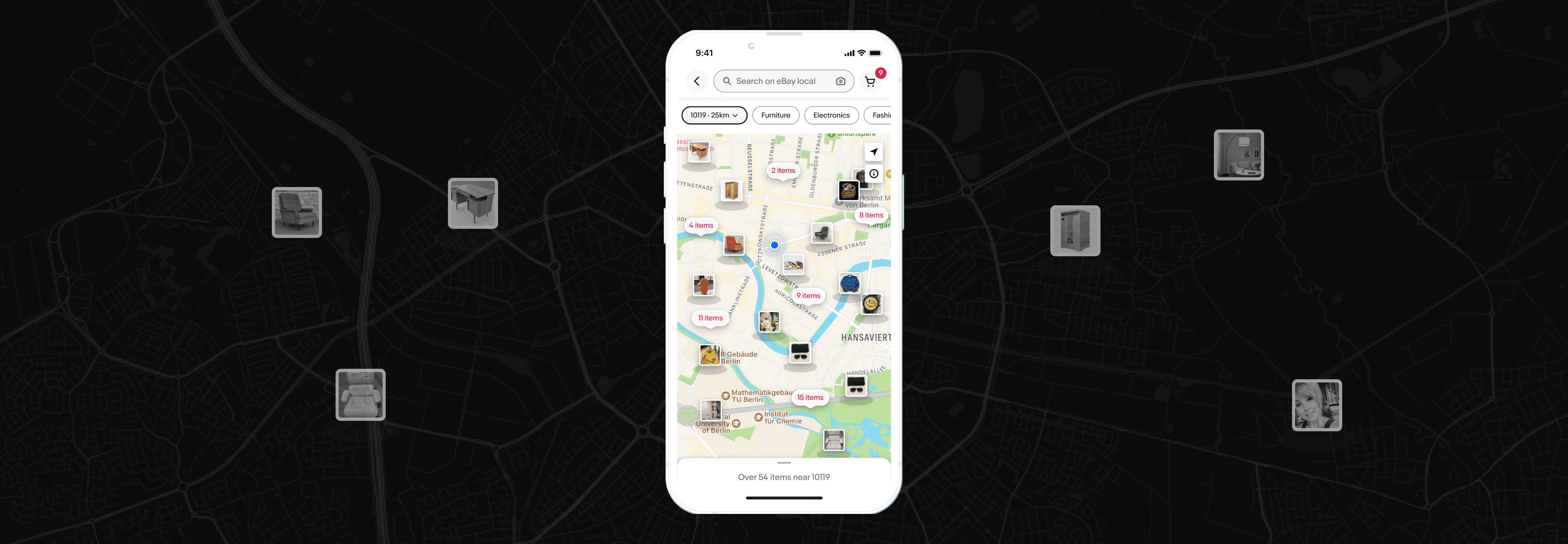
Solution: Map-Based Local Shopping
A dynamic, map-based experience would make local shopping faster, more intuitive, and trust-driven, directly solving for proximity, discovery, and engagement, while boosting seller visibility and local transactions
How Maps Enhance Local Shopping?
Sense of Direction & Approximate Location
Easy Discovery & Inspiration
Intuitive and Seamless Navigation
Reduced Cognitive Load and Faster Decisions
Competitive Advantage Over List-Based Platforms
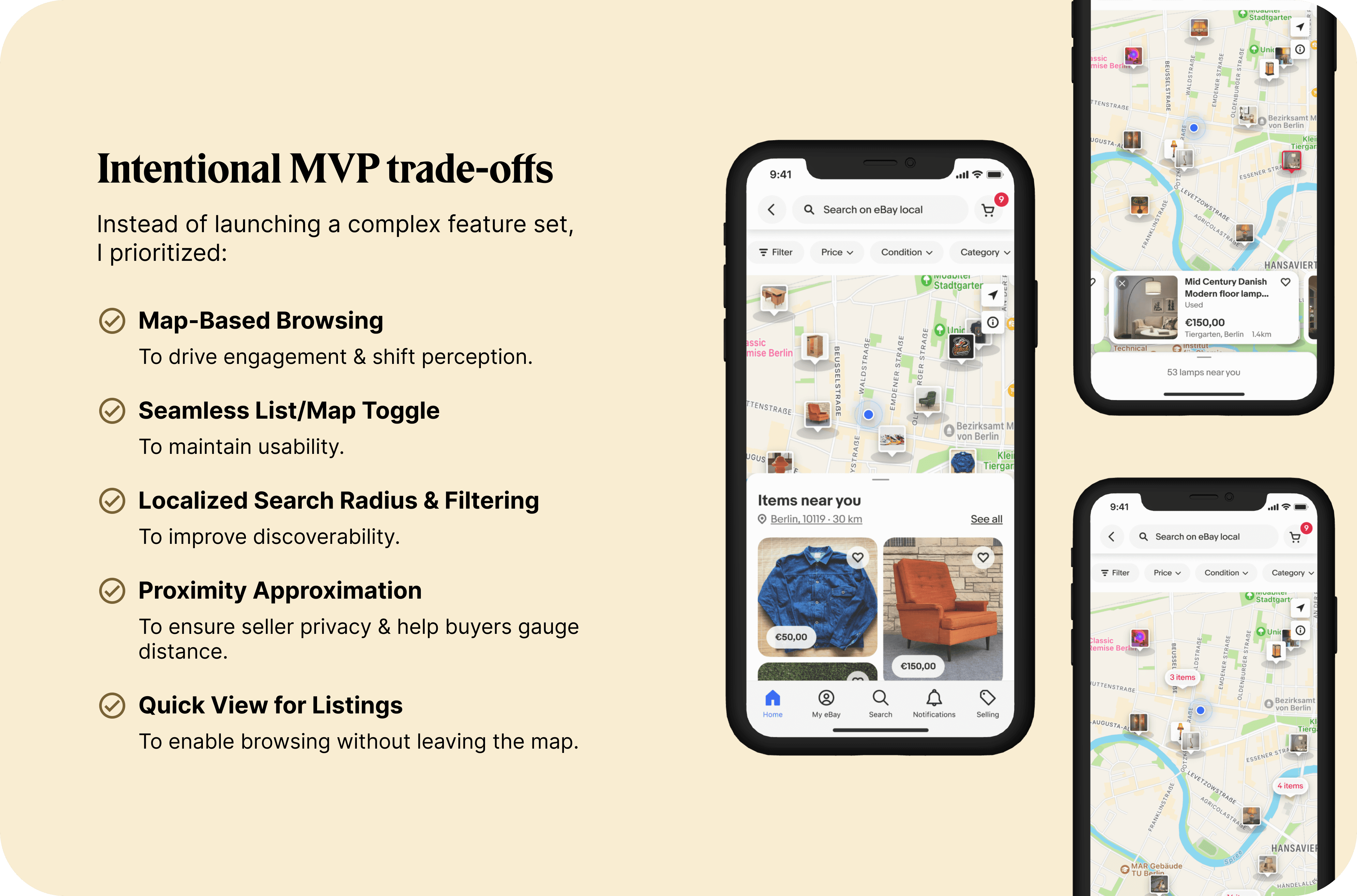
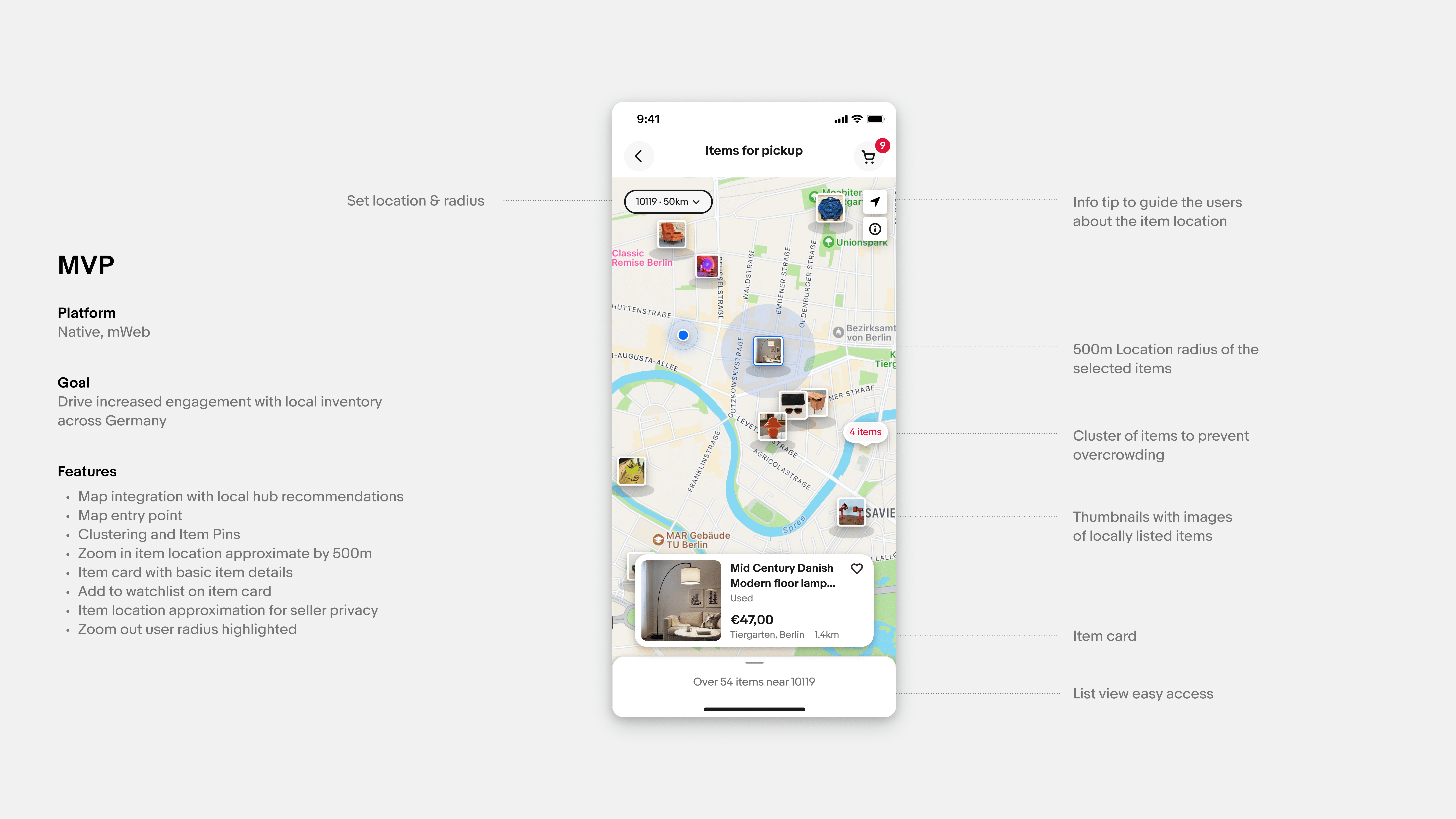
MVP Strategy — Building a Smart, Scalable Foundation
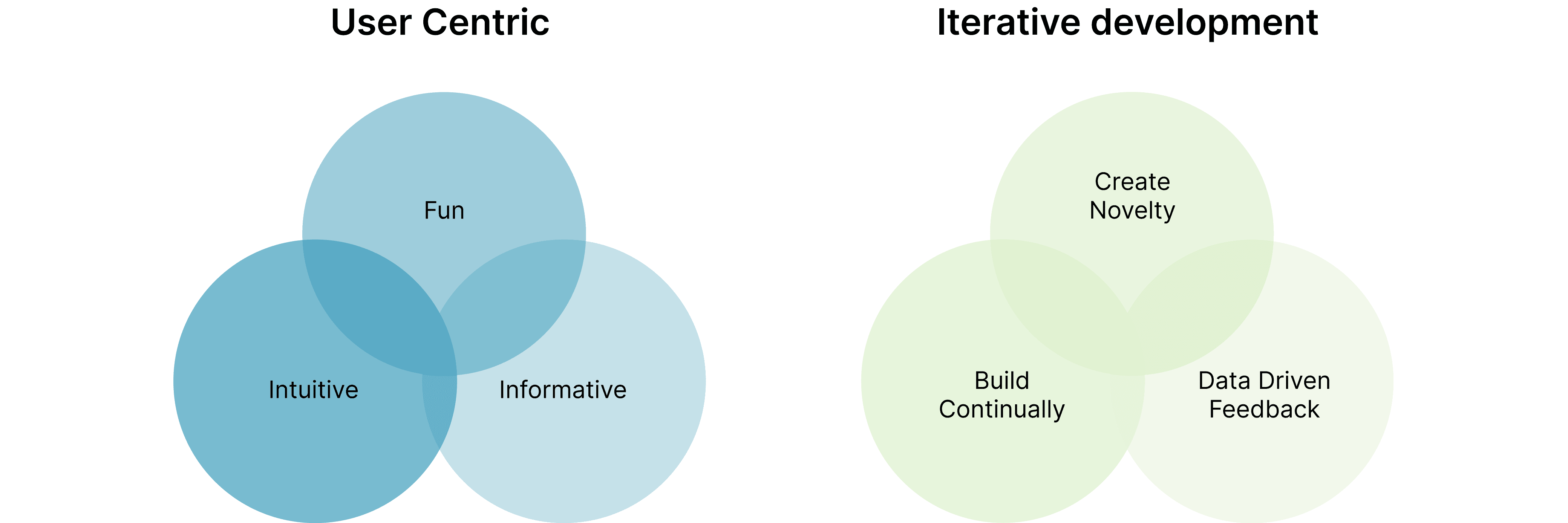
Without a dedicated PM or any prior blueprint for map-based shopping at eBay, I took ownership of framing the North Star vision, defining the product strategy, and scoping the MVP — setting a clear long-term goal of making local shopping on eBay faster, more intuitive, and trust-driven.
To move fast and build the right foundation, I focused the MVP on the minimum viable set of features needed to entice users, prove early value, and start learning — without overbuilding upfront.
Measuring Success
We defined key success metrics to validate early adoption, user engagement, and progress toward rebuilding eBay’s local C2C market.
Key Metrics (KPIs)
Key Insight
eBay was perceived as an “online marketplace,” not a local shopping platform—we needed to shift that perception and behavior.
IDEATE → CONCEPTUALIZING THE SOLUTION
3) Designing the Local Shopping Experience
With a clear strategy, validated problem framing, and a focused MVP plan, I moved into designing a new experience that would reshape local shopping on eBay.
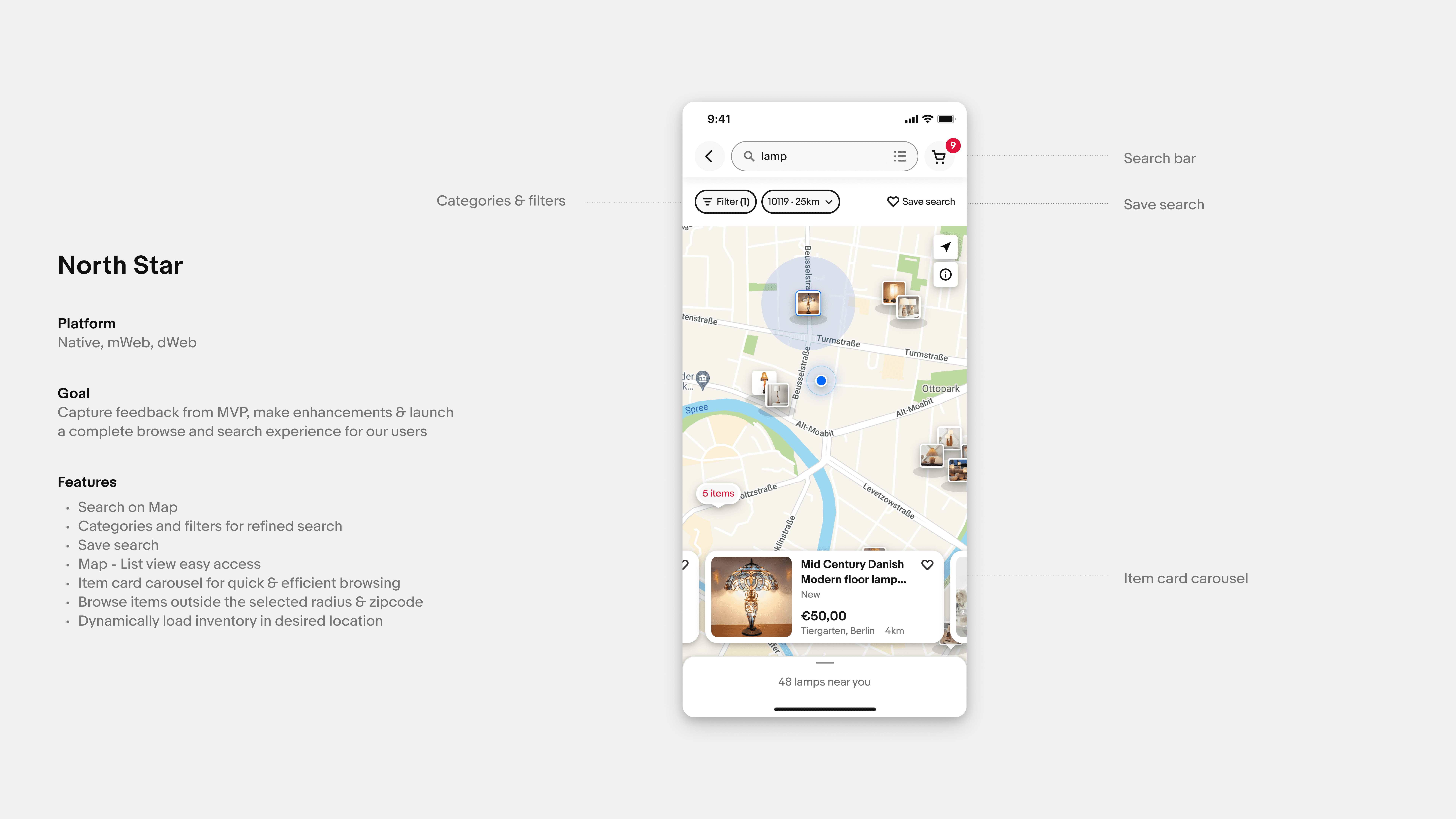
North Star Vision
I envisioned a reimagined local marketplace experience centered on:
Map-Integrated Browsing → Discoverability
Users could visually explore nearby items instead of manually filtering through listings, reducing friction.
Dynamic Location Filtering → Convenience
A seamless ZIP code & radius selector ensured buyers could intuitively control their local shopping range.
Map - List Hybrid Approach → Seamless
Since many users still relied on list views, an easy toggle between map & list maintained usability and flexibility.
Trust-Enhancing Privacy Controls
Seller locations remained approximate, balancing safety & discoverability.
Item Proximity Awareness → Decision-Making
Easily gauge how far an item is, helping buyers assess feasibility, filter options, and prioritize nearby purchases.
Save search & Create Alert → Ease
Easily resume searches and receive alerts for new listings, ensuring you never miss out on what you’re looking for.
Localization & Accessibility → Personalized
Tailored the experience for German & UK markets, considering buying behaviors, payment methods, and regulations.
TEST → VALIDATE & ITERATE
Launching, Learning & Scaling the MVP
We introduced eBay’s first-ever map-based local shopping flow through a phased rollout in Germany. Each release shipped just enough to be valuable and learnable, allowing us to observe real behavior, validate assumptions, and iterate quickly.
Grounded in Agile and Lean UX principles, this approach enabled data-driven refinement while balancing resource constraints, business priorities, and a scalable path toward our evolving North Star. Each phase sharpened the experience, bringing us closer to a seamless, user-centered local shopping journey.
RESULTS → IMPACT & OUTCOMES
A Game-Changer for Local Shopping on eBay
This wasn’t just a feature launch — it was a strategic shift. From being seen as outdated and losing ground in Germany’s C2C space, eBay began reclaiming relevance with a local-first experience that felt fresh, intuitive, and built for real-world needs.
The phased rollout let us validate quickly, refine with real user behavior, and scale with confidence — steadily rebuilding trust and engagement in a market dominated by long-standing local players.
These outcomes marked the beginning of a new chapter for eBay in Germany — and proved that thoughtful, focused design can drive real business impact.
$52.5M GMV
+5% Growth in Local Transactions
+10%
BBOWAC increase
+11%
Local Items Browsed per Session
30%
Faster Item Discovery
+12%
Growth in Wishlist Saves for Local Items
-7%
Reduction in Drop-Off Rate
USER FEEDBACK → VALIDATION & INSIGHTS
What Users Said
Real users loved it. 76% shared positive sentiment, validating the need for a more intuitive, interactive way to shop locally built for ease, trust, and low-friction transactions.
Feedback also surfaced small usability gaps that helped guide future refinements.

REFLECT → KEY TAKEAWAYS
What This Project Taught Me
Design as Strategy, Not Just Execution
This wasn’t about shipping pixels, it was about solving a high-stakes business problem with clarity, speed, and intention.
Product Thinking Thrives on Constraints
No PM, no blueprint, tight timelines, and ambiguity became a launchpad to define the vision, shape the strategy, and drive prioritization.
Great UX Reflects Real Behavior
By aligning with how people actually shop locally, not how we assume they do, we made adoption intuitive and meaningful.
Smart MVPs Build Momentum
Well-scoped trade-offs helped us move fast, validate early, and lay the foundation to scale.
Simple Can Be Bold
The most powerful shift came from a clean, visual-first experience that made local shopping feel seamless, not transactional.
MY EDGE AS A DESIGNER
Skills That Drove Strategy & Impact
This project brought together everything I value in design: strategic thinking, user empathy, measurable impact, and purposeful execution. From zero foundation to an industry-first launch, I led the charge in building something meaningful.

Strategic Product Thinking
I didn’t just design interfaces, I defined the why, what, and how. Every decision was rooted in user behavior, competitive gaps, and business priorities.
Proactive Leadership
With no PM or researcher, I took full ownership, framing the vision, validating the problem, and executing fast. I drove alignment, made data-informed calls, and built momentum from day one.
Creative Under Constraints
Tight timelines and limited resources made me sharper, not scrappier. I focused on essentials, cut the noise, and shipped a high-impact MVP that laid the foundation for scale.
Cross-Functional Collaboration
Partnered closely with engineers, legal, and cross-functional teams to build trust, reduce friction, and deliver with quality from concept to launch.
Design That Moves the Needle
This wasn’t just a nice-to-have feature, it helped eBay reclaim relevance, drive $52M+ GMV, and reshape how users shop locally.
Design Communication & Stakeholder Alignment
Effectively presented to leadership, secured buy-in across levels, and kept strategy aligned through clear, confident storytelling.
Final Thoughts: A Defining Moment in My Career
This project was more than just a new feature—it was a game-changer for eBay’s local commerce strategy. It set the foundation for future iterations and opened doors for more immersive, interactive shopping experiences.
I spearheaded a first-of-its-kind product, driving strategy, research, and execution.
I reshaped how local commerce works on eBay, making it easier, more intuitive, and engaging.
I proved that even with constraints, strategic UX thinking can drive massive business impact.

This project exemplifies my ability to think strategically, execute intentionally, and drive meaningful change through design. And I’m proud to have led that transformation.